
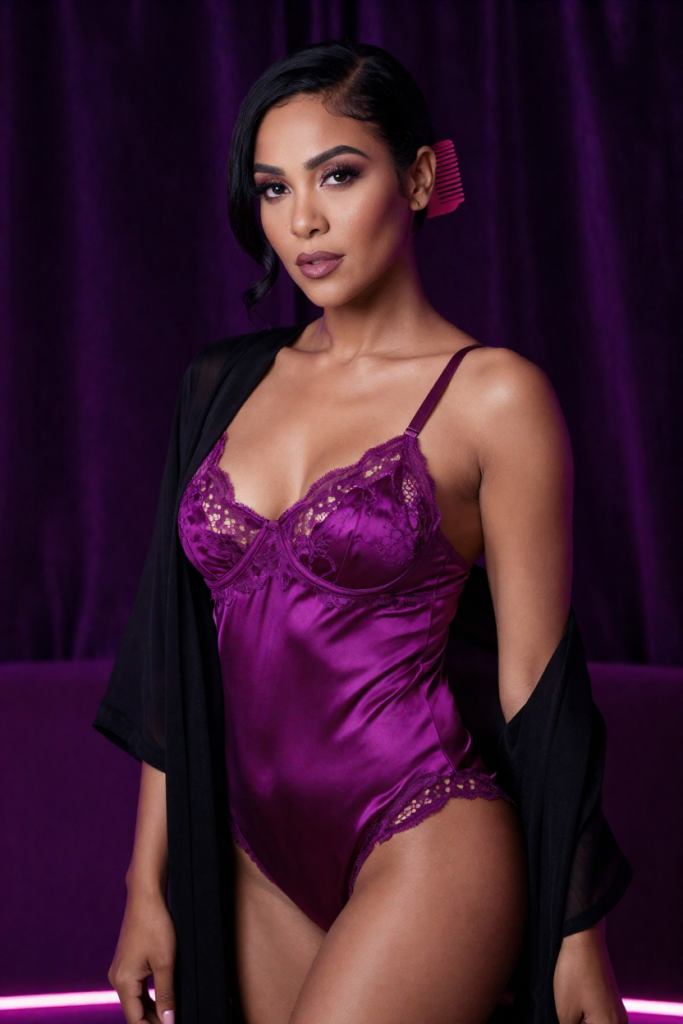
Series drift is usually blamed on the model. Look at the list instead. The muse was described from memory at every job, and memory edits as it goes — in a dim room, twice as fast. “Raven-black hair in a low chignon” in frame one becomes “dark elegant hair” by frame four, and the audience watches a stranger take her place. The repair is clerical: write her down once, on a list you paste rather than retype.
Five fixed lines, always in order
Age — a number, and in this room a mature one. Hair — colour, length and one habitual style. Build — two or three words. Face — one or two details that endure every crop. Signature — the comb, the mark, the detail that survives even in low light. Everything else belongs to the changing line: outfit, corner, hour, lamp. Changing lines are meant to change. List lines are not.
State the lines plainly and positively; adjectives are reinterpreted at every attempt, concrete descriptions survive. And version the list: when she is deliberately changed, save the new text as version two with a date, so an old set can be remade exactly as it was.
Working from the list
Pair the entry with changing lines that share one corner and one light, generate at the standard 6-credit cost, and keep the best third. Spend on repairs, transfers and upscales only after the cull. When a frame returns off character, the cause is almost always on the list: a changing line contradicted an entry, or a line was too vague to hold her in the dark.
What a list cannot do
It cannot hold a muse who was never decided. Decide her on paper first. The list is not where the imagination happens; it is where the imagination is kept, frame after frame, visit after visit.